Residue type and spread
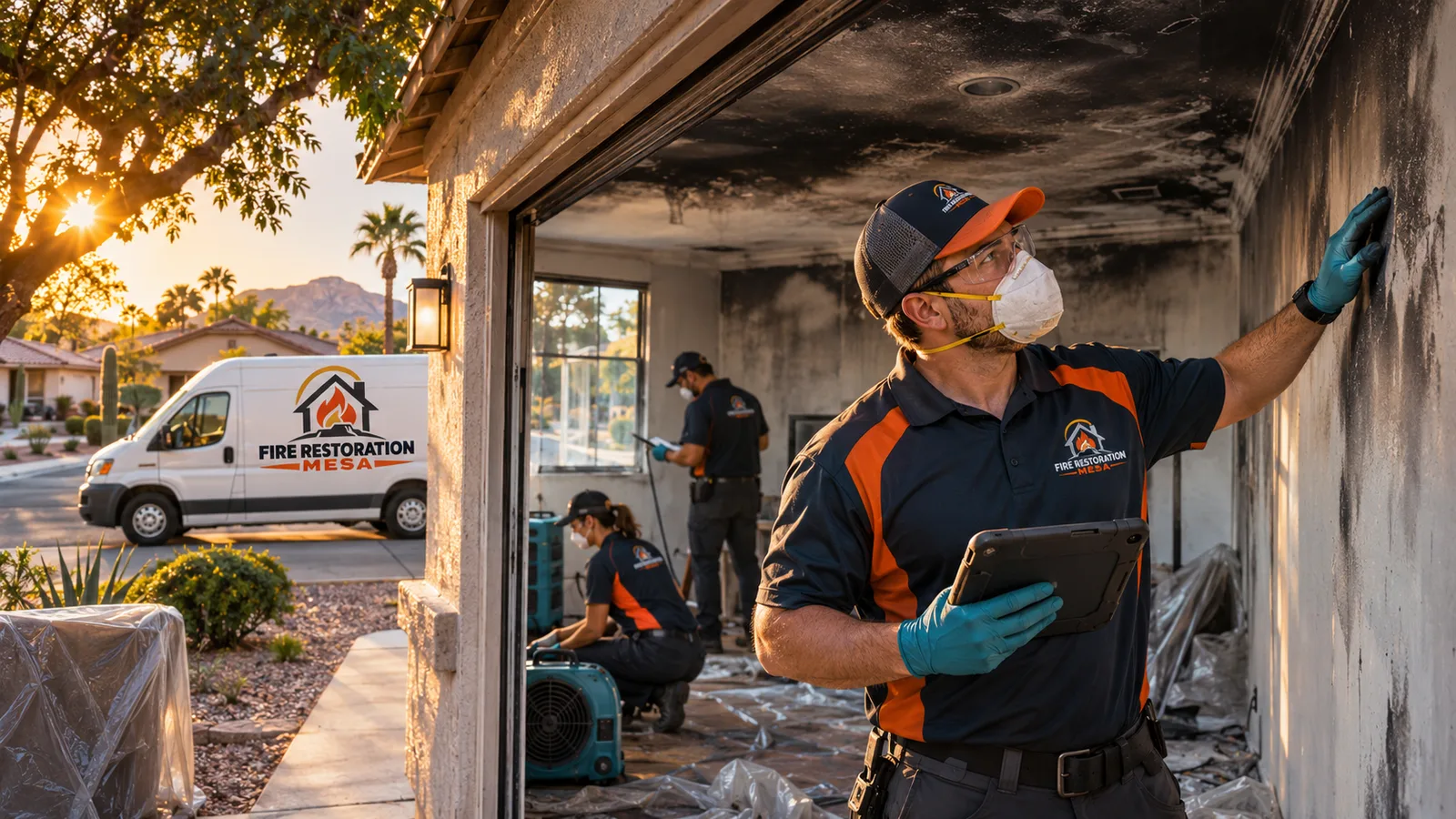
The contractor looks for soot patterns on walls, ceilings, trim, contents, and hidden surfaces. Residue close to the source may require a different cleaning method than light smoke film in adjoining rooms.
Serving Mesa, Arizona & surrounding areas
Connecting Mesa Homeowners with Local Fire Restoration Services
Smoke cleanup in Mesa
One call connects you with a local contractor who handles smoke cleanup and restoration planning in your area.
✓One call starts the conversation
✓Talk with a local contractor
✓You decide what happens next
Smoke cleanup planning
Smoke damage cleanup cost Mesa homeowners ask about depends on what burned, how far residue traveled, which materials absorbed odor, and whether heat or water damaged the structure. Smoke can leave dry soot, oily soot, protein residue, or wet smoke residue. Each behaves differently on painted drywall, unfinished wood, fabric, HVAC components, cabinets, and flooring.
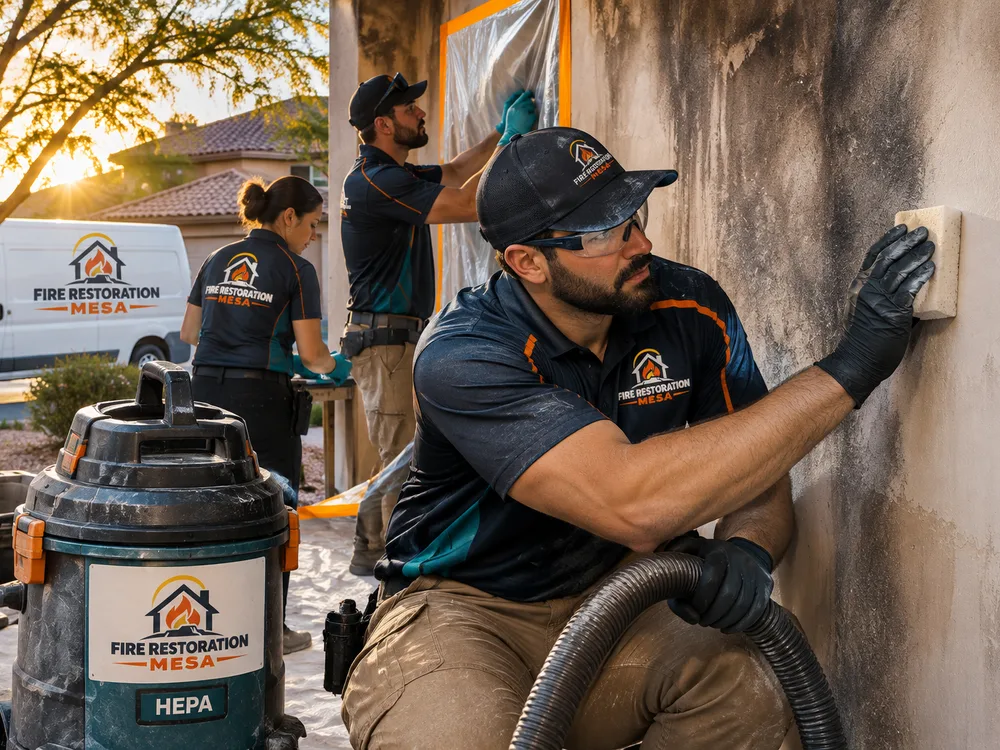
A contractor begins by identifying the affected rooms and the type of residue. Dry soot can often be removed with specialized dry sponges and HEPA vacuuming before wet cleaning begins. Oily or sticky residue usually needs detergent-based cleaning, while porous materials may need sealing, deodorization, removal, or replacement. The goal is to remove contamination rather than paint over it.
Mesa homes often have open living areas, vaulted ceilings, block construction, and attached garages. Those layouts can allow smoke to move through connected rooms, attic penetrations, and return-air pathways. During Mesa's hot months, air-conditioning systems may circulate odor through ductwork if they ran during the fire. A contractor can determine whether duct cleaning, filter replacement, or HVAC evaluation belongs in the restoration plan.
Fire Restoration Mesa connects callers with independent local contractors across the Mesa area who handle smoke cleanup work. You talk with the contractor directly about the property and decide what happens next.
The contractor looks for soot patterns on walls, ceilings, trim, contents, and hidden surfaces. Residue close to the source may require a different cleaning method than light smoke film in adjoining rooms.
Nonporous surfaces such as metal, glass, and sealed tile may clean well. Drywall, insulation, carpet padding, upholstery, and unfinished wood can hold odor and may need further treatment.
Odor control starts with residue removal. Contractors may use HEPA air filtration, thermal fogging, hydroxyl treatment, or ozone only after deciding which materials remain in place.
Fire suppression water, melted finishes, warped cabinets, and weakened drywall can add repair work beyond smoke cleaning. The scope should separate cleaning, demolition, drying, and rebuilding.
The cleanup process
The contractor reviews where the fire occurred, which rooms have visible soot or odor, and whether water was used to put out the fire. They can identify materials that need testing, cleaning, or removal.
Affected rooms may be isolated to limit residue movement while surfaces and contents are cleaned. HEPA filtration and controlled demolition can be part of the plan when damaged materials cannot be restored.
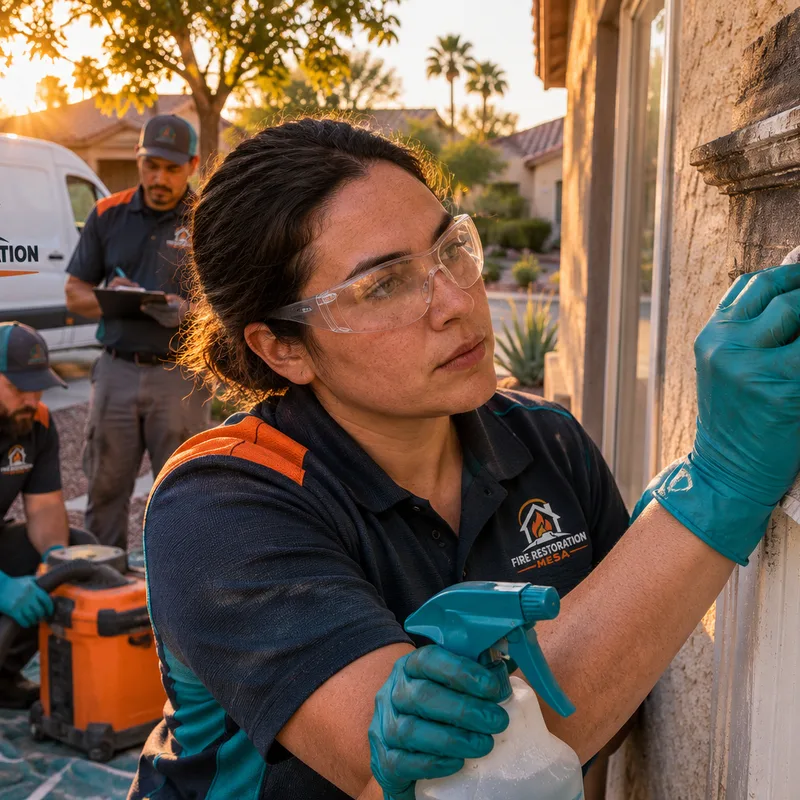
Cleaning methods are selected for the residue and surface. Once contamination and odor sources are addressed, damaged finishes can be prepared for repair or replacement.
The contractor provides the fire damage restoration estimate Mesa property owners use to understand the proposed work. You discuss the scope directly and decide whether to proceed.
One call connects you with a local contractor who can discuss smoke residue, odor, damaged materials, and the restoration work your Mesa property may need.
CALL NOW: +1 877 290 0427Cleanup in view

Helpful details
Smoke damage cleanup involves assessing residue, containing affected areas, cleaning surfaces and contents, addressing odor sources, and identifying materials that need removal or repair. The contractor explains which steps apply to the property after reviewing the fire and the affected rooms.
Cleaning may be appropriate when residue can be removed without leaving odor or damage behind. Repairs may be needed when heat, soot, water, or odor has penetrated drywall, insulation, cabinetry, flooring, or other porous materials. The contractor can separate cleanable items from materials that need replacement.
Ask the contractor to explain the areas included, the cleaning methods proposed, odor treatment, demolition or disposal, drying needs, and any repair work after cleanup. A clear scope makes it easier to understand the fire damage restoration cost Mesa homeowners are considering and decide whether the work fits the property's needs.
Odor can remain when soot or smoke-affected porous materials are left behind. Contractors look beyond visible walls to insulation, fabrics, framing cavities, HVAC pathways, and contents when determining the deodorization plan.
Enter your ZIP code and you are connected with a local contractor who serves that area. You talk with the contractor directly about smoke cleanup and restoration planning.
Fire damage repair cost Mesa homeowners consider can include work beyond cleaning, such as replacing damaged drywall, insulation, trim, flooring, cabinets, or paint finishes. Ask the contractor whether repair work is part of the proposed scope or should be handled after cleaning and deodorization are complete.
Mesa smoke cleanup
Pick up the phone for a direct conversation with a local contractor who handles smoke damage cleanup and fire restoration planning in the Mesa area.